
The Deep Symbolism of Coronation: Exploring the Layers of Meanings
- James S.

- May 6, 2023
- 5 min read
Everything you need to know about the sacred coronation traditions.

The coronation of a monarch is a time-honoured tradition that has been carried out for centuries in many countries around the world. It is a ceremony that is steeped in religious symbolism, representing the monarch's power, authority, and connection to the divine. In this post, we'll explore the ten moments of religious significance that make up the coronation ceremony and what they symbolise.
The Location
Westminster Abbey, the site of 39 coronations, is steeped in history and significance. The first coronation held in the Collegiate church was that of William the Conqueror on Christmas Day in 1066. The Abbey's association with Saxon king St. Edward the Confessor was what drew him to choose it as the location for his coronation. The church's hallowed vaults and chapels have since witnessed the burials of saints, royalty, and national heroes.

The Processional Cross
The procession into Westminster Abbey is led by the newly finished and blessed Cross of Wales, a gift from the King to the Church in Wales. This Cross serves as a symbol of cooperation between the Anglican and Catholic Churches, as it features two shards of wood from the True Cross, upon which Jesus was crucified.
These shards were presented to the king by Pope Francis, making the Cross a unifying force between the two faiths. As the Cross of Wales leads the procession into the Abbey, it represents the coming together of different beliefs and the power of unity.

Holy Anointing Oil
The anointing is the most sacred part of the coronation ceremony, and takes place before the investiture and crowning. The Archbishop pours holy oil from the Ampulla (or vessel) into the spoon, and anoints the sovereign on the hands, breast and head.

Presentation of the Monarch
The presentation of the monarch to the people is an essential part of the coronation ceremony. It symbolises the monarch's acceptance by the people and their recognition of the monarch's authority. The presentation is often accompanied by cheers and applause from the crowd, further emphasising the monarch's popularity and legitimacy.

The Crowning
The crowning of the monarch is perhaps the most iconic moment of the coronation ceremony. It symbolises the monarch's assumption of power and authority and will be accompanied by the ringing of bells and other celebratory sounds.

The Sceptre
The sceptre is a symbol of the monarch's authority and will be carried by the monarch during the coronation ceremony. It represents the monarch's power and serves as a reminder of the monarch's duty to rule justly and fairly.

The first sceptre is called the "Sceptre with the Cross" or the "Rising Sceptre," and it symbolises the monarch's temporal power. It is a long, slender rod made of gold and topped with a cross.

The second sceptre is called the "Sceptre with the Dove" or the "Dove Sceptre," and it symbolises the monarch's spiritual power. It is also made of gold and is topped with a dove, which represents the Holy Spirit.

The Sword
Curtana, also known as the Sword of Mercy is another symbol of the monarch's authority, representing the monarch's role as defender of the realm. One of five swords to be used at the coronation of British kings and queens. Considered a Crown Jewel of the United Kingdom, its end is blunt and squared to symbolise mercy.

The Ring
The Sovereign's Ring, also known as the wedding ring of England, is a gold ring with a sapphire centrepiece and a ruby cross set in diamonds. Since King Edward VII, every monarch has worn it during their coronation as a symbol of their commitment to their duties and responsibilities to the nation they rule.
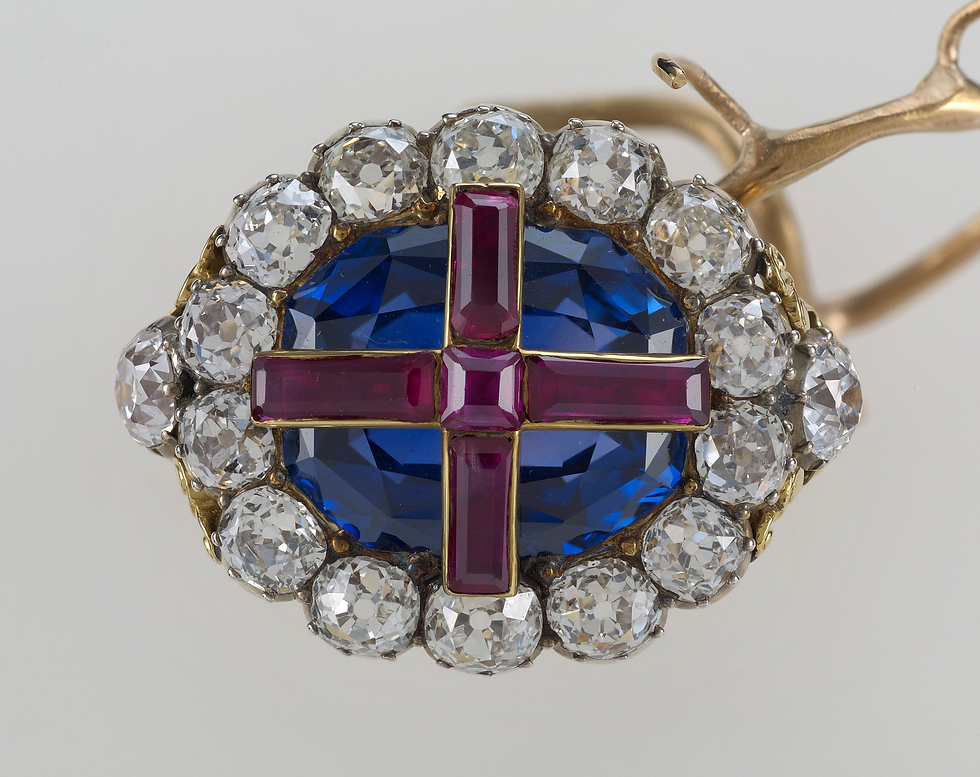
The presentation of the Sovereign's Ring by the Archbishop is one of the most significant moments of the ceremony, representing the bond between the monarch and their country. After receiving the ring, the monarch proceeds to receive St. Edward's crown. Before that, the Archbishop places the Sovereign's Ring on the fourth finger of the monarch's hand, symbolising their connection to God and the divine right to rule.
The Queen Consort also receives a ring during the coronation ceremony. Camilla's ring, previously worn by many queen consorts before her, including the Queen Mother, is made of rubies and was created in 1831 for Queen Adelaide, who was married to King William IV.

The Orb
Often seen with the Sceptre, The Sovereign’s Orb, as this part of the Crown Jewels is officially named, is a symbol of Godly power. A cross above a globe, it represents ‘Christ’s dominion over the world’, as the Monarch is God’s representative on Earth.

It represents the monarch's global authority and is often used as a reminder of the monarch's duty to lead their country on the international stage.

Made for Charles II’s coronation in 1661, the orb is a 30cm-wide hollow gold sphere, mounted with nine emeralds, 18 rubies, nine sapphires, 365 diamonds, 375 pearls, one amethyst and one glass stone. The pearls divide the orb into three sections, which represent the three continents medieval rulers believed existed. The orb weighs 1.32 kg (roughly 43 oz)

The Homage
The Homage is an integral part of the coronation ceremony, during which millions around the world will be invited to take part in the ancient tradition for the first time in history. The new Homage of the People replaces the traditional Homage of Peers and allows for "a chorus of millions of voices" to participate in the ceremony, according to Lambeth Palace.
The Archbishop of Canterbury, Justin Welby, will call upon "all persons of goodwill in The United Kingdom of Great Britain and Northern Ireland, and of the other Realms and the Territories to make their homage, in heart and voice, to their undoubted King, defender of all".

The public will be asked to swear allegiance to King Charles III, with the order of service reading, "I swear that I will pay true allegiance to Your Majesty, and to your heirs and successors according to law. So help me God." The hope is that the change will result in a "great cry around the nation and around the world of support for the King" from those watching on television, online, or gathered in the open air at big screens.
The Coronation Oath
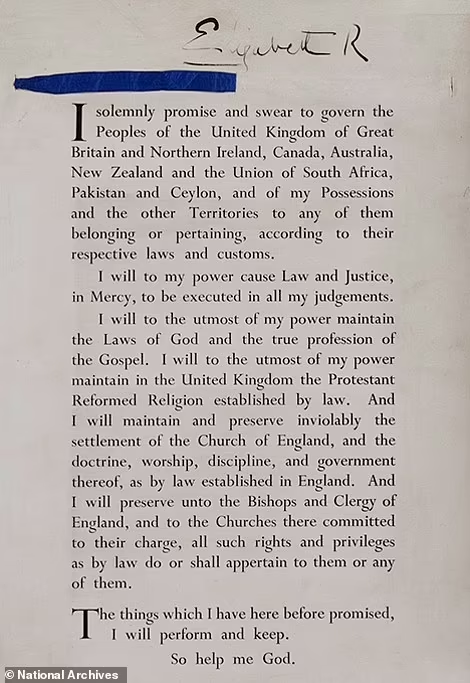
The coronation oath is a solemn promise made by the monarch to uphold the laws and customs of their country and to rule justly and fairly. It represents the monarch's commitment to their duties and responsibilities and serves as a reminder of the monarch's obligation to their people.
The Benediction
The Benediction is a Christian act of worship that is part of the Coronation ceremony, reflecting the Monarch's role and celebrating the character of Britain. The Archbishop of Canterbury authorizes a new Liturgy for each Coronation, and the latest Liturgy commissioned by Justin Welby is based on ancient texts and ceremonial elements, drawing on centuries of tradition. The Liturgy focuses on the theme of loving service to others, central to Christian teaching and contemporary Monarchy's character, accompanied by a Commentary explaining the Christian meaning and symbolism of the key elements of the service.
The coronation is a ceremony filled with religious symbolism that represents the monarch's connection to God, their people, and the world at large.
From the anointing with oil to the benediction, each moment of the coronation ceremony serves to remind the monarch of their duty to rule justly and fairly and to protect and serve their loyal subjects.

Despite the changes in the world over the centuries, the coronation ceremony remains an important tradition that reflects the enduring power and authority of monarchs around the world.


Comments