
The Sound of Tradition: The History of Coronation Music
- James S.

- May 6, 2023
- 3 min read
Updated: May 7, 2023
Join us as we unveil the majestic history of coronation music.

The coronation of British monarchs is a tradition that stretches back over a millennium, but the musical soundscape that accompanies these ceremonies is a much more recent invention. Many accounts of coronations before the 19th century have been lost, and those that remain mention music very little, if at all.
The sound of the coronation ceremony that has become so familiar today is a 20th-century invention, created as a way of presenting the past as the present.

The first English coronation to resemble those of today was for Edgar in 973, and from then until 1603, the coronation ended with a Catholic mass. Coronation music was likely sung chants, which, from 1603 with the coronation of James I, were refashioned into coronation anthems with English text.
VIVAT
James II's coronation in 1685 saw the appearance of music by well-known composers, including Henry Purcell, whose setting of "I was glad" was used for the entrance anthem. As James ascended the stairs towards the Chair of Estate, the King’s Scholars from the Westminster School shouted "Vivat" (the Acclamation), which became a tradition at coronations. George II's coronation in 1727 introduced George Frideric Handel's coronation anthems, including "Zadok the Priest" (HWV 258), which set text from 1 Kings 1:38-40 that has appeared in some form at every coronation since Edgar. It is believed that the anthems were placed in the service to provide a flow, giving time for the monarchs to change robes before the anointing.

What music was played at Queen Elizabeth II’s coronation?
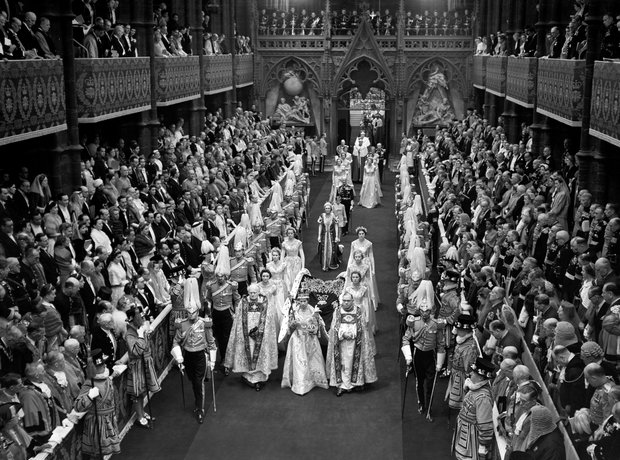
Queen Elizabeth II’s coronation on 2nd June 1953 had a grand and majestic musical accompaniment featuring some of the finest orchestral pieces and choral music.

The orchestral pieces performed before the coronation service included Purcell’s Chaconne from ‘King Arthur’ arranged by Herbage, and the Trumpet Tune attributed to Jeremiah Clarke. Another masterpiece was Walton’s Crown Imperial, which was revised for the coronation of Queen Elizabeth II, and was played during the coronation procession. Holst's Jupiter was another piece played at the coronation, featuring the popular hymn "I vow to thee, my country" with wonderful patriotic associations. Ireland's Epic March, Banks of Green Willow by Butterworth, and Handel's Music for the Royal Fireworks were other notable orchestral pieces played at the coronation.
In addition, choral music featured prominently, including Parry's I was glad, which was the first piece played as the coronation service started, and William Harris's Let my prayer come up, which was performed as the Gradual in the service. Other notable choral pieces included Oh Most Merciful by Charles Wood and Litany for Five Voices by Thomas Tallis, which accompanied the Regalia Procession. The pieces by Vaughan Williams, Behold, O God our Defender, Greensleeves, and The Creed (from G minor mass), were also performed, making the coronation a grand and unforgettable event.

"God Save the Queen" was performed by the choir and congregation of Westminster Abbey, where the ceremony was held. The national anthem is typically sung after the sovereign takes the oath, symbolising the beginning of their reign. This will also be the case this Saturday.

New works for the New King
King Charles III's coronation, this Saturday 6th May 2023, has commissioned new works to add to the rich tapestry of pieces composed for the occasion. While the sound of the coronation ceremony is a recent invention, the rich history of the tradition itself is one that has captured the imagination of people around the world.

The coronation ceremony is a religious ceremony centred around the Eucharist, and it involves a procession and recognition, oath, anointing, investiture, enthronement, and homage. It is a millennium-old tradition of pomp and circumstance, steeped in history and meaning.
As we await King Charles III's coronation and the unveiling of new pieces to add to the magnificent array of coronation music, may you find joy in listening to the sounds that have marked this thousand-year-old tradition, and remember that like a good piece of music, the coronation ceremony will continue to resonate with us for generations to come.


Comments